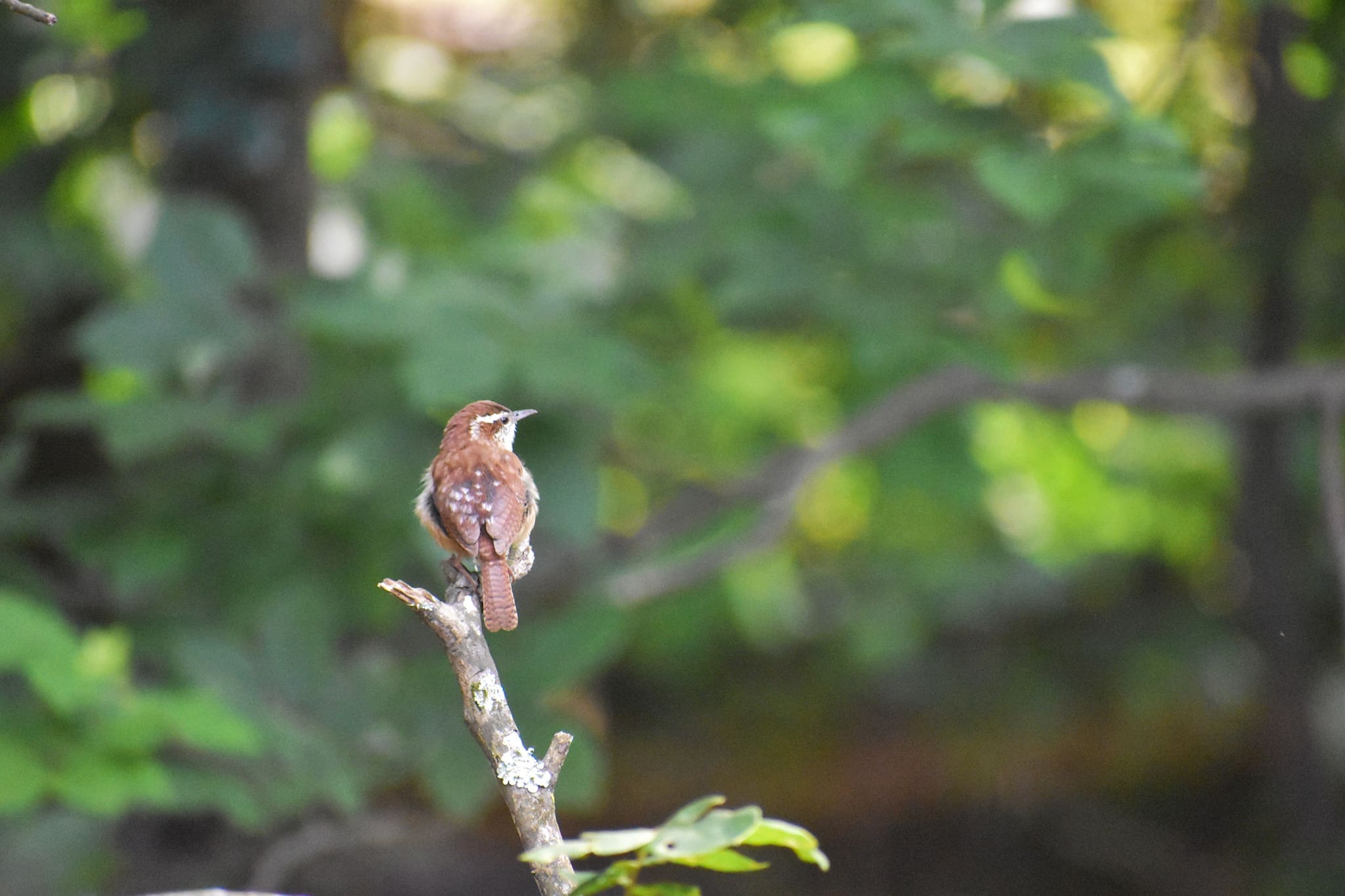
If you’re a birdwatcher in Alabama, buckle up and get ready, because you have many birds to spot – over 400 species. We’re going to talk about some of the more common birds you’re likely to spot while on a casual hike in Alabama, plus a few of my favorites for good measure.
Unlike most animals, birds are more likely to be heard before they are seen, if they can be spotted at all. If you’re not able to spend several hours on YouTube studying various bird calls before you venture into the wild, you can instead download the Merlin Bird ID app, which allows users to record audio of bird calls for identification. The more you use the app and pay attention to what you hear, the easier it will be to identify birds by their calls without help.
Depending on where you are in the state, you will have vastly different birding experiences. Down south, if you explore Gulf State Park, you are more likely to see killdeer, sandpipers, plovers and gulls, in addition to the more widespread songbirds.
Further north, in the Bankhead National Forest, where I lived and worked as an environmental educator, we often saw songbirds like bluebirds, robins, cardinals, mourning doves, sparrows, finches, blue jays, woodpeckers, wrens and crows. We also saw water birds like great blue herons and mallard ducks, ground nesting birds like chuck-will’s-widows and whip-poor-whills, and birds of prey like hawks, owls and vultures.

Birds can be unofficially classified in many ways, and I usually find myself relying on food sources as a way to understand which birds can be found where. Osprey and herons, for example, eat fish, so they’re going to be found near water. Finches and sparrows primarily eat seeds and grains, which makes them easy to attract for backyard bird watching by filling a bird feeder. Warblers, phoebes, wrens, flycatchers, martins, woodpeckers, orioles and nuthatches all eat insects, making them prime birds to watch for when hiking. Hummingbirds love nectar, so keep your eyes open for them near flowers. You can also attract them with specific feeders.

In addition to bringing viewers happiness, birds benefit the ecosystem, like keeping bug populations under control, fertilizing the ground with their feces and helping pollinate plants. The National Audubon Society even explains how birds affect the habitat by constructing homes.

I believe birds are one of the most underappreciated animals we have. They are plentiful and beautiful, but people often take them for granted. During my time teaching environmental science, I developed a deep appreciation for a particularly underrated bird: vultures. Alabama has two types of vultures: the black vulture and the turkey vulture.
Because one of our resident educational animals was a black vulture, I had the opportunity to learn about how helpful vultures are for the environment. Often considered gross and somewhat creepy, vultures are a large reason we don’t have frequent animal carcasses lying around when we hike because they feed primarily on carrion. Vultures also have such potent stomach acid, they can digest anthrax and cholera. Because of their digestive power, they eliminate many diseases that could otherwise be passed on to humans. The things that make them seem gross and creepy are the things that benefit humans so much.
Vultures are social birds, often eating in groups, but they do not enjoy the company of vultures outside their families. They do not possess vocal cords, which means they make more guttural or hissing sounds when they communicate, along with biting and pecking each other, or staff, if you’re lucky enough to work with one!

Unfortunately, like many beautiful animals, vultures across the globe are at risk, and several species face extinction without rapid, significant conservation efforts. Dr. Evan Buechley, one of the leading researchers for vulture conservation, is working with organizations worldwide for the common cause of saving vultures.
Vultures belong to a group of birds known as birds of prey or raptors. Another subset of raptors are owls, and they tend to be more popular than vultures. At the environmental center, we had three of Alabama’s eight native owl species — the great horned owl, the barred owl, and the barn owl. The barn owl in particular stole many hearts, including mine.
Owls are known for being symbols of wisdom — a trait we frequently questioned as we worked to train our resident owls for school programming! But while their intelligence can be debated, their ability to fly silently is unquestionable. When we taught school groups, we often showed this video as an example of how silently owls can fly. If you’re a birder on the lookout for owls, you will really need to hone your skills!

Both the black vulture and the barn owl at the environmental center were imprinted on humans who took the birds from their natural habitat in a possibly well-meaning but definitely harmful decision. Not only is it illegal to take birds from the wild, but raptors require highly specialized care and cannot be adequately cared for by the average citizen. Imprinting means they can never return to the wild. If you find a bird that you think is in danger, call your local wildlife center and do NOT touch the animal.

If you are interested in doing some birding this summer, check out Outdoor Alabama’s list of birding trails to find a good spot. A pair of binoculars and a notebook to record your sightings are fun additions to enhance the experience, and be sure to check out the Alabama Ornithological Society’s printable checklist for a complete list of 455 species!
Planning to go birding? Let us know which species you see! Send us an email at staff@thesunrisenews.com.
Author

Like our work? Then support it!

Want to get early access to columns, unique newsletters and help keep The Sunrise News active? Then support us on Ko-Fi!