Disclaimer:
This article represents the opinions of its author. The views expressed here are not necessarily representative of The Sunrise News staff as a whole.
Alabama has some of the highest reptile and amphibian biodiversity in North America, and has been referred to as America’s Amazon because of the plethora of species found in a single state.
Reptiles and amphibians comprise my favorite category of animals: herptiles. Herptiles are a group of cold-blooded animals that do not include fish, and Alabama is full of them.
From my time teaching environmental education, I learned that many people don’t actually understand the difference between reptiles and amphibians, nor do they understand what a “cold-blooded” animal actually is. I am here to help!
“Cold-blooded” animals, also known as ectotherms, do not regulate their own body temperature. You are an endotherm – you create your own heat. Snakes, frogs, turtles, salamanders, alligators, crocodiles and all other herptiles cannot. That is why you will often find snakes and turtles sunning themselves on rocks or on pavement. They are trying to heat up on the warm asphalt. However, all animals have an ideal temperature range, and even our cold-blooded friends can get too hot, so on our hottest Alabama days, you may have a harder time finding these animals.
Reptiles have scales, usually lay leathery eggs, don’t usually have vocal cords and primarily live on land. There are 93 native reptile species in Alabama and they include snakes, turtles, lizards and alligators.
Amphibians have permeable skin – which means substances can get in and out through their skin – lay jelly-like eggs, often have vocal cords and start their lives in the water, often staying close to or in water in their adult years. There are two groups of amphibians in Alabama – salamanders and frogs.
With 93 reptiles and 73 amphibians calling Alabama home, we have a lot of ground to cover, so I’ve written two separate articles. The second one will be published on October 15.
I will do my best to give you a general overview of most categories with more detailed information about specific species sprinkled in. If you have more questions, check Outdoor Alabama or send me an email at staff@thesunrisenews.com.
Reptiles
Snakes
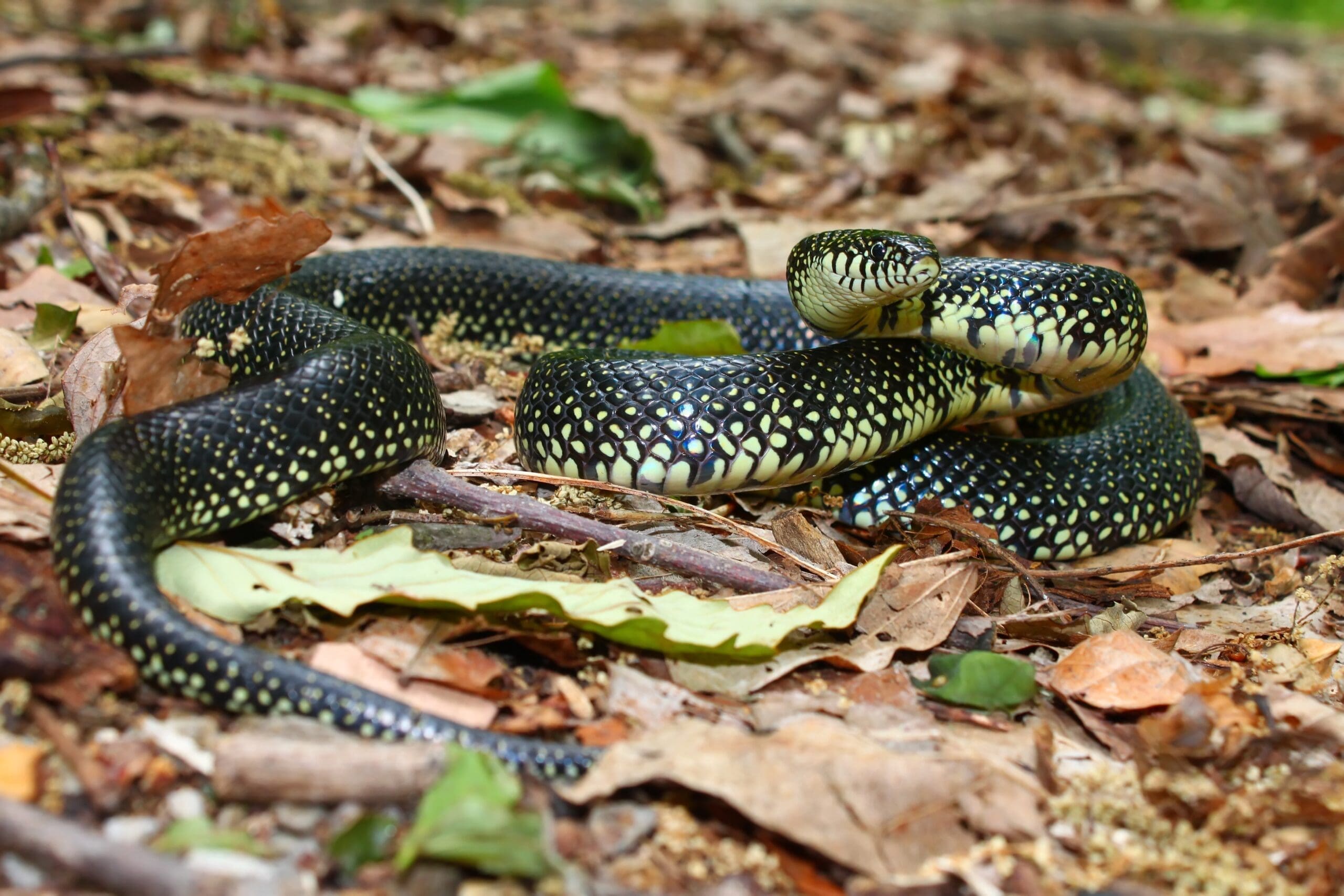
There are 46 species of snakes in Alabama, but a few of the most common are gray ratsnakes, garters, black racers, common watersnakes, DeKay’s brown snakes, plain bellied water snakes, midland water snakes, ringneck snakes, rough green snakes, cornsnakes and kingsnakes. We also have some venomous snakes: copperheads, cottonmouth/water moccasins, coral snakes, timber/canebrake rattlesnakes, dusky pigmy rattlesnakes and diamondback rattlesnakes.
It’s important to note that if bitten by a venomous snake, seek medical attention immediately and do not suck the venom out or apply a tourniquet. Even if you cannot identify the snake, you will know if it was venomous or not by how many teeth marks you see in your skin – two teeth marks means fangs, which means venom. Many teeth marks means no venom, but you will still need first aid.
I often hear people refer to snakes in two categories: venomous snakes vs “harmless” snakes, but that isn’t quite right. Anything with a mouth can bite, so I would hesitate to refer to nonvenomous snakes as “harmless,” particularly because it gives our venomous snakes an even worse reputation.
Venomous snakes are not harmful simply because they can envenomate – inject venom into – what they bite. All snakes, regardless of their venom status, are beneficial to the environment and do not seek out humans to bite. In addition, snakes do not “chase” people, but they do follow a specific path to get where they want to go, and if you are in their way, they will head right to you. Simply step out of their way and give them plenty of space to pass.
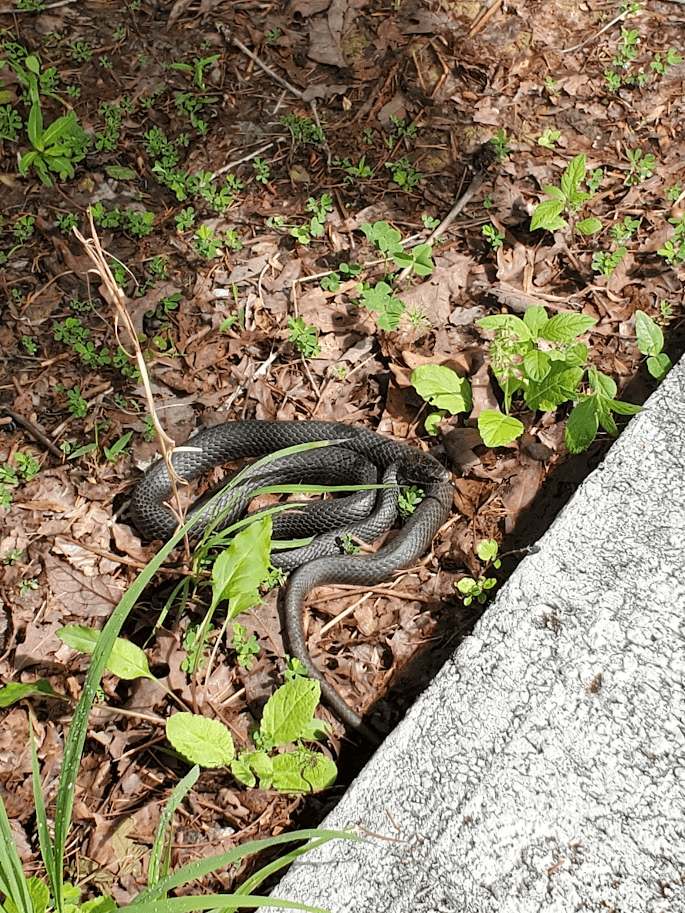
The eastern indigo snake is one of my favorite reptiles. It is the largest snake in North America, measuring at 6-7 feet long, but its populations are declining and it is currently listed as threatened by the U.S. Fish and Wildlife Service, the highest conservation concern. These snakes are deep black, sometimes with a reddish chin. Several environmental centers around the state have indigo snakes in their education animal collection, so be sure to check them out as you explore state parks and 4-H centers.
Lizards
The term “lizard” includes many types of reptiles including skinks, glass lizards, geckos and anoles.
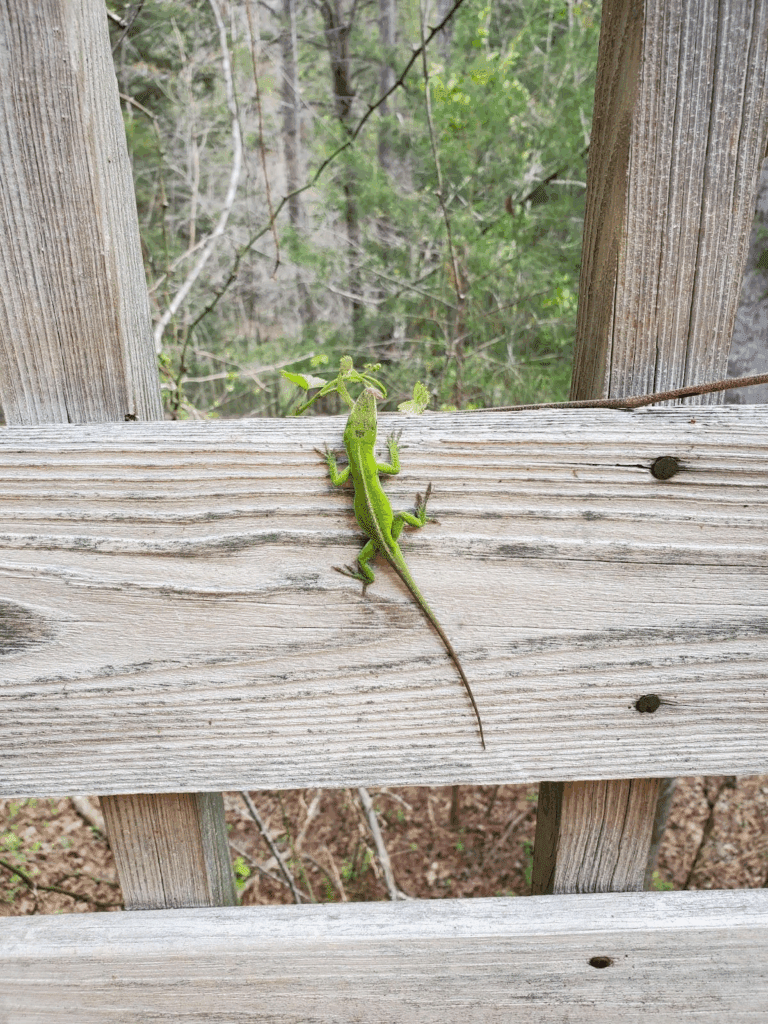
There are two types of anoles in Alabama, but only one is native. The green anole, pictured below, is a native species and can grow up to eight inches long. These anoles can be green or change their color to brown, due to changes in mood, health and even humidity. They may be mistaken for chameleons because of their color-shifting abilities, but they are not related to chameleons and don’t really resemble them.
The brown anole is originally native to Cuba, the Bahamas, Swan Island, Honduras, Cayman Brac and Little Cayman. However, it is now found in many locations globally including southern Alabama. Despite being nonnative, brown anoles still fill an environmental niche, and are food for other animals.
Turtles
Turtles are plentiful in Alabama – 32 species call Alabama home. One such species, the flattened musk turtle, is endemic to Alabama, which means our state is the only place in the world where it is found. It is critically endangered due to habitat loss from development and mining.
Another fascinating species found in Alabama is the eastern box turtle. Widely appreciated for their beautifully patterned shells, box turtles are a type of hinge-shelled turtles, which means their bottom shell has a hinge in it that allows these turtles to pull their head, legs and tail inside and then shut their shell.
At the environmental center, we had three resident eastern box turtles. All three turtles had injuries that prevent them from living in the wild.
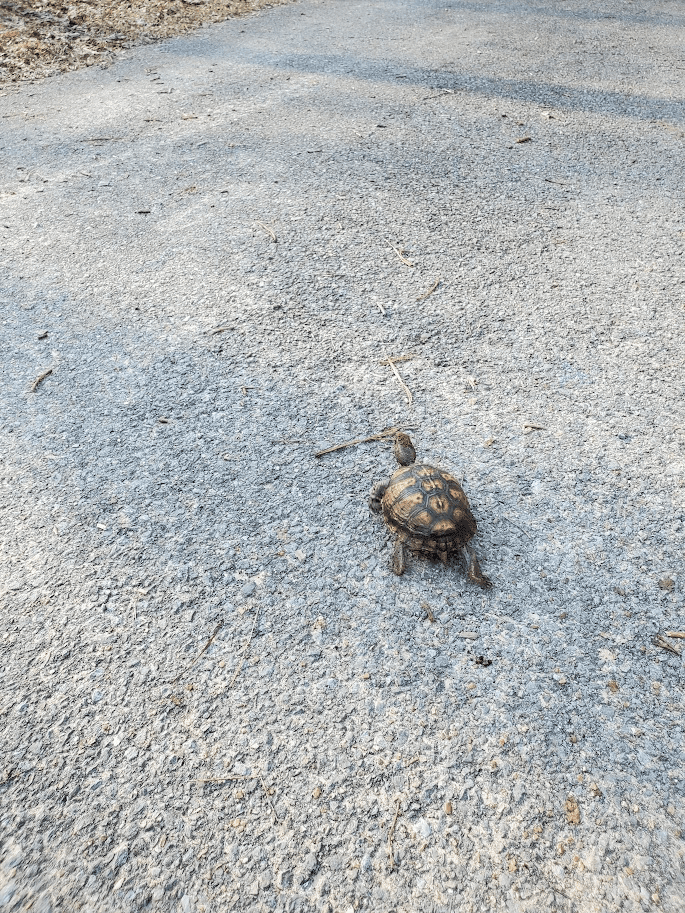
Part of my role as reptile and amphibian care assistant involved making sure our resident animals received enrichment, and for our turtles this often meant taking them outside for some supervised exploration. Pictured above is one of our female box turtles out for a walk. Though eastern box turtles normally grow to about six inches long, the turtle pictured above was kept as a pet with insufficient light and did not grow to her proper size. This also means she cannot use her shell properly and would be easy prey in the wild. If you are interested in keeping turtles, make sure you do extensive research beforehand.

(Note: Turtles were handled for research purposes by professionals. Please do not handle wildlife unless you are trained to do so.)
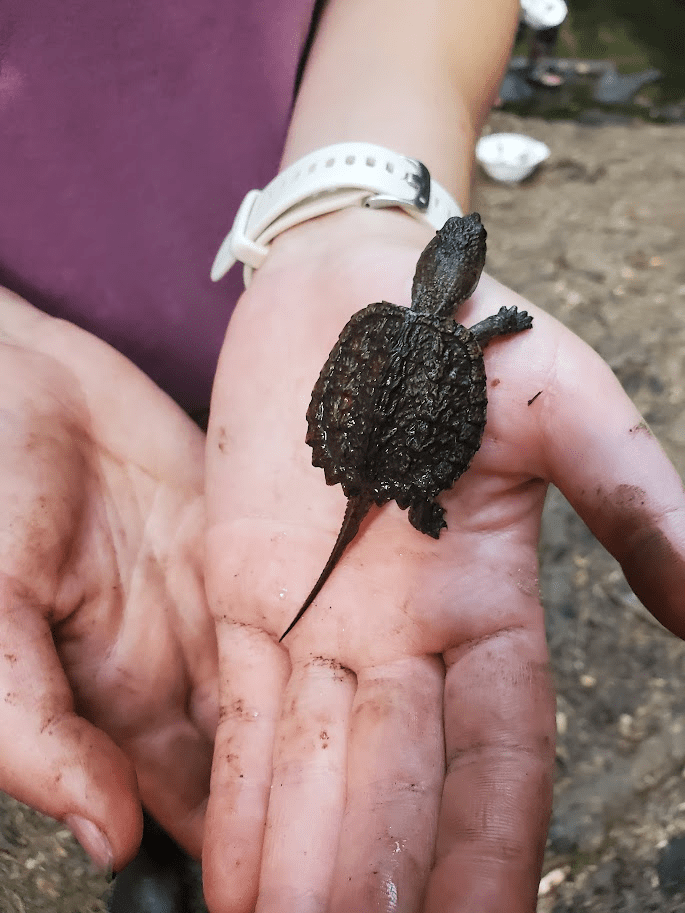
Turtles worldwide are threatened due to habitat loss and the pet industry. Many people illegally take turtles from the wild to sell or keep as pets. Turtles are also threatened due to car collisions; they will warm themselves on the pavement or cross roads to travel for food or breeding, and they cannot move fast enough to avoid getting hit. Some people even try to hit turtles on purpose.
If you see a turtle crossing the road, be sure to safely slow down and if possible, stop completely to move the turtle from the road. When moving turtles, it is important to remember to hold a turtle by the underside of its shell, not the top, and keep your hands far enough back to not get bitten. Turtles have long necks that can reach back to try to bite you, and they do not understand you are trying to help them. Additionally, turtles have incredibly strong internal senses of direction, which means we need to place them on the side of the road they were originally headed toward. If the turtle is headed north, and you place it on the south side of the road, it will just try to cross the road again.
Alligators
Of course, our list wouldn’t be complete without alligators. The American alligator can grow quite large, with the average male alligator growing to about 16 feet long and they can live to be 50 years old.
Their original range included all parts of Alabama, so there is no need to be concerned if you spot one farther from the coast than you expected. Their rarity in the northern region is the result of over-hunting in the early 1900s, and the increased sightings are actually a positive sign of conservation efforts.
Just like our Florida neighbors, it’s important that we Alabamians treat any body of water big enough for an alligator as if it does in fact have an alligator in it. That means keeping pets on leashes and not swimming in natural bodies of water.
If you come across an alligator, don’t interact with it or feed it. Alligators, like all wild animals, prefer to leave humans alone and to be left alone. They have the right to exist in their natural habitat, and should only be a concern if they are an actual nuisance. They are a federally protected species and state law forbids killing them without a permit.
It is also important to note that developers who build houses, businesses and other structures in swamp land are destroying habitat for alligators, who play a vital role in the ecosystem. If you live in a house built on alligator habitat, you’re going to encounter alligators. It doesn’t make sense to build in a swamp and then complain when the original residents make their presence known.
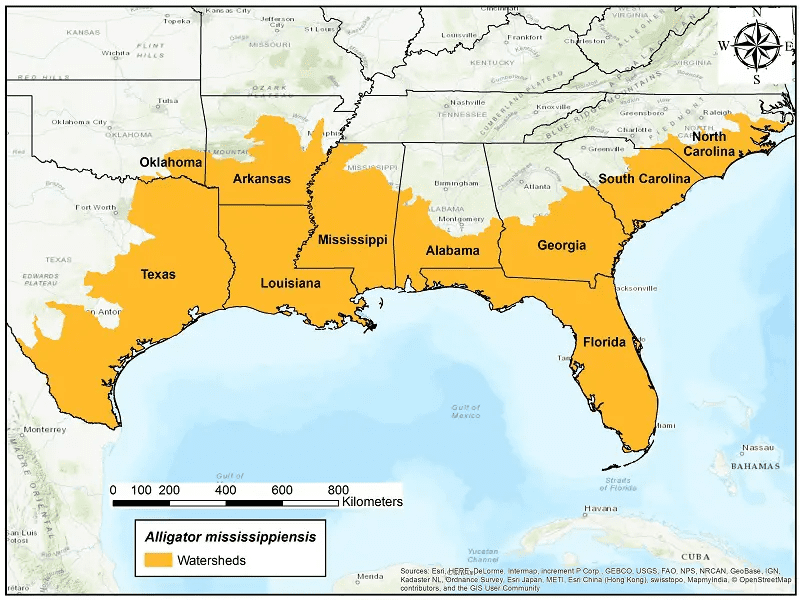
Alligators are fascinating animals, and they have a lot of qualities that differentiate them from other reptiles, like the ability to vocalize and the way they nurture their young. They also help keep the pest population down.
Keep your eyes open for these awesome animals as you explore and be on the lookout for the next article, where we dive into all things amphibians!
Author

Like our work? Then support it!

Want to get early access to columns, unique newsletters and help keep The Sunrise News active? Then support us on Ko-Fi!
Suggest a correction
Disclaimer:
This article represents the opinions of its author. The views expressed here are not necessarily representative of The Sunrise News staff as a whole.