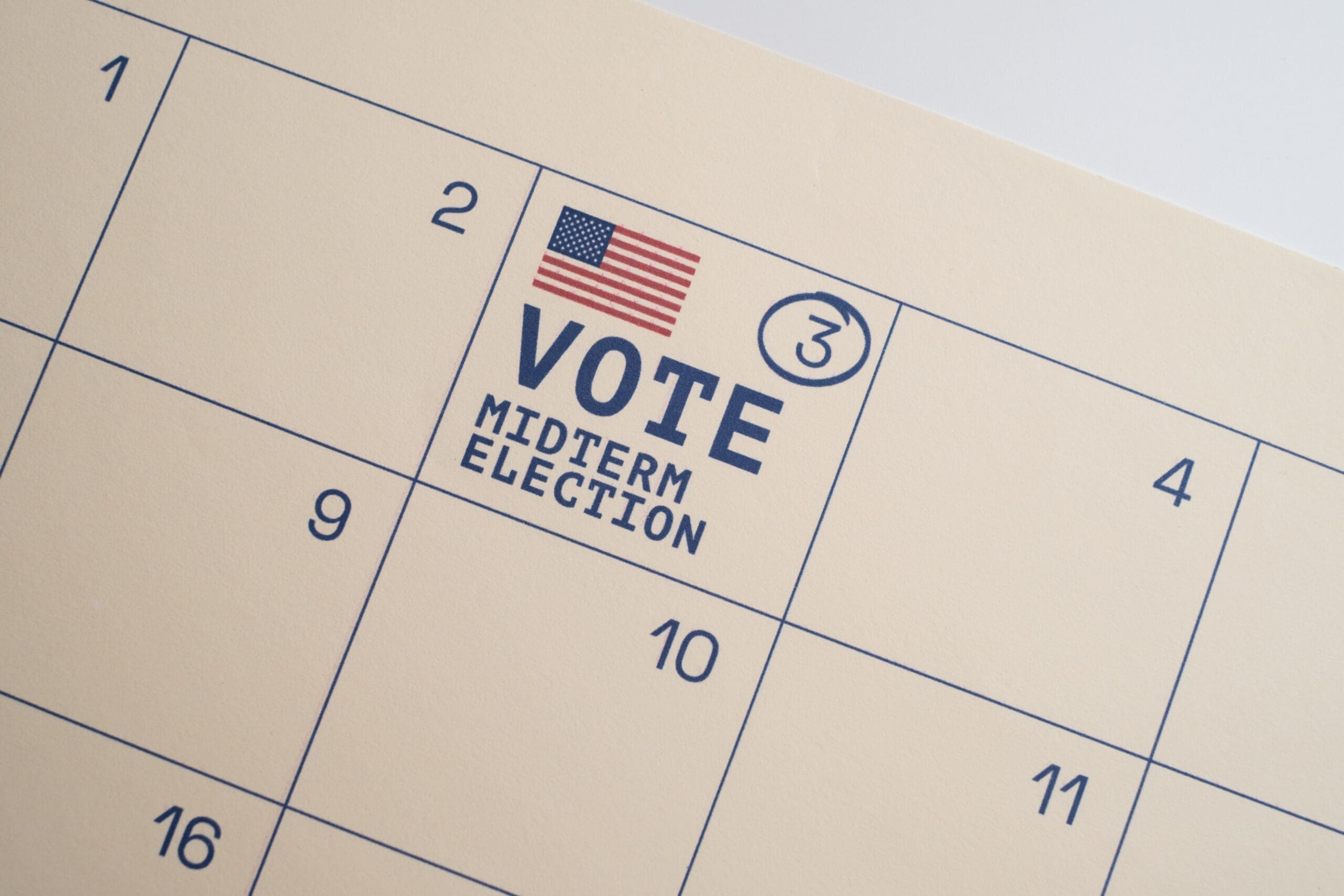
Alabama’s gubernatorial election is right around the corner, with Alabamians heading to the polls on Nov. 3 to elect Gov. Kay Ivey’s successor.
This year’s race sees a rematch between the Democratic nominee, former U.S. Sen. Doug Jones, and the Republican nominee, current U.S. Sen. Tommy Tuberville. Jones and Tuberville previously ran against each other in the 2020 Senate race, where Tuberville usurped Jones, the incumbent, by winning 60% of the vote.
There are no plans for a formal debate between the two candidates this year — Tuberville has declined Jones’s calls for a debate, saying, “There’s so much difference between us, I mean, there’s no reason to get up there and argue about differences of opinion.”
In lieu of a debate between Tuberville and Jones, The Sunrise News has compiled this voter guide to what each candidate has said about some of the biggest issues on Alabamians’ minds as they head to the polls this year.
Affordability:
Affordability is the buzzword of the 2026 midterms, with polling from KFF showing that cost-of-living concerns are the top issues voters are concerned with going into election season.
In Alabama’s governor’s race, both Tuberville and Jones have promised tax breaks as a way to help voters keep money in their pockets. Both candidates support eliminating the state’s grocery tax. Currently, Alabama levies a 2% tax on grocery sales.
Alabama is one of eight states that tax groceries, though the tax has decreased twice in recent years — with lawmakers lowering the tax from 4% to 3% in 2023 before lowering the tax to 2% in 2025.
Both candidates also have plans to suspend or lower other taxes if elected governor. Jones has called for Alabama’s gas tax to be partially suspended when fuel prices spike — as gas and diesel costs soared this year in the wake of the U.S.’s war in Iran.
Jones and Tuberville have both called for not taxing overtime pay or tips. In Congress, Tuberville voted in favor of the One Big Beautiful Bill, a federal omnibus budget bill that, among many other measures, temporarily removed taxation on overtime pay and tips.
Tuberville said he wants to lower taxes across the board, saying at a September meeting of the Birmingham Monday Morning Quarterback Club that, “We all pay too many taxes.”
In his “Golden Age Playbook” policy plan, Tuberville writes, “I’ll oppose every state tax increase, and I’ll veto any that reaches my desk.”
Notably, Tuberville has proposed eliminating the state’s income tax. Last year, Alabama’s income tax produced $7.5 billion in revenue from corporate and personal income tax — an amount that makes up 70% of the state’s K-12 funding. Tuberville’s campaign has not announced how he plans to eliminate the state’s income tax, including how to address the loss of tax revenue.
Nine states — Alaska, Florida, Nevada, New Hampshire, South Dakota, Tennessee, Texas, Washington and Wyoming — do not have personal income taxes. Most of these states make up for revenue they would earn through income taxes by charging higher property taxes. However, raising property taxes in lieu of lowering or eliminating the state’s income taxes would be difficult in Alabama, due to strict limits on how much taxes can be raised in the state. Tuberville wants to freeze property tax increases on homes owned by seniors, as well.
Changing the state’s income tax policy would require state legislators to pass a bill.
Outside of tax policy, on the campaign trail, Jones said, if elected, he would like to work with the state legislature to raise the minimum wage in the state. Jones has not said how much he would like to see minimum wage increased.
Minimum wage in Alabama is the federal minimum wage rate of $7.25 per hour. Alabama is one of 20 states that does not have a minimum wage higher than the federal rate.
Changing the minimum wage in the state would require the legislature to pass a bill setting a new minimum wage. During this year’s legislative session, several Democratic senators introduced a bill seeking to raise the state’s minimum wage to $10 per hour. However, the bill failed to gain any traction in the Republican-controlled legislature.
Tuberville has not brought up the state’s minimum wage as an issue during his gubernatorial campaign.
Data centers:
Data center policy has emerged as a central campaign issue in this year’s governor’s race, with data center development exploding across the state. There are currently 15 planned data center developments across the state, with several other projects under consideration.
Tuberville’s campaign created a four-point plan outlining his approach to data center policy. His points include:
- “Local communities will decide whether a data center is right for them.”
- “Data centers will pay the total cost of the transmission lines, substations and water systems they require.”
- “Data centers must replace the power and water capacity they take.”
- “We will place data centers in Alabama’s highest property-tax bracket where they should be.”
Tuberville’s policy plan marks a more regulated approach to data centers than he had at the start of his campaign. Earlier this year, Tuberville had praised the tax revenue data centers could generate for the state and suggested data center opposition has been encouraged by China.
Jones, meanwhile, has proposed a one-year moratorium on data center development in the state. Jones said putting a moratorium in place would give the state and developers more time to understand how data centers impact communities, such as how much strain data centers place on local utilities and what potential health impacts of living near a data center may include.
“If you put a moratorium and there are people who want to do this, you get everybody to the table, you start talking, you try to figure this out, I really think it could be done in less than a year,” Jones said at a town hall event in Lowndes County.
His campaign’s data center plan also focuses on increasing transparency around data center development by banning non-disclosure agreements between public officials and data center developers, as well as calling for full financial and ethical disclosures by public officials voting on data center development to ensure they do not have financial ties to the developments. Jones’s plan also calls for full economic, environmental and health impact studies on all data center projects, as well as creating a “searchable statewide database of every abatement, water permit, and large-load power contract, updated annually by project and dollar.”
Several states have placed temporary moratoriums or other restrictions on data center development. While some states’ legislatures have spearheaded restrictions, other states’ governors, such as New York Governor Kathy Hochul, have instituted moratoriums through executive orders.
Tuberville has spoken out against data center moratoriums.
“I think there’s 27 states that have already said, ‘Oh, we’re not going to build data centers. We’re not going to do that. It makes too much noise. It’s going to ruin the climate.’ Bull crap,” Tuberville said at an event in Opelika in July.
Jobs:
Tuberville has made promises to bring more manufacturing jobs to the state a cornerstone of his campaign. His “Golden Age Playbook” promises the state will offer the “strongest economic incentives” in the country, but does not detail any specific tax breaks the state will sanction.
“President Trump is working to bring manufacturing home to America, and Alabama will be the first in line for every plant, every supplier, and every good job that comes with it. As Governor, I’ll be the state’s closer, every day, for every county,” the playbook reads.
As a senator, Tuberville has been involved in bringing a submarine manufacturing facility, a partnership between the U.S. Navy and the company Hadrian, to Colbert County. The plant is expected to create up to 1,000 jobs within the next two years.
“We’re going to structure everything for business in this state,” Tuberville said at a campaign event at the Rotary Club of Birmingham earlier this month. “I am so sick and tired of red tape.”
Tuberville also emphasized increasing technical and trade education in the state to increase the state’s workforce.
“To further strengthen Alabama’s workforce, we must also recognize that not everyone needs to attend a traditional four-year college. Career and technical education programs like dual enrollment, apprenticeships, and short-term certifications should be recognized as respectable paths for opportunity and should not be treated as second-rate,” Tuberville wrote in an editorial piece published by Yellowhammer News this June.
In that piece, Tuberville also wrote about the importance of increasing educational opportunities related to artificial intelligence as part of Alabama’s workforce training.
“AI is the future. Nvidia CEO Jensen Huang hit the nail on the head a few years ago when he said that you won’t lose your job to AI—you’ll lose it to your coworker who uses it. We must teach AI. If we don’t, Alabama’s workforce will be left behind,” he wrote.
Jones has promised to increase access to technical and trade education. His campaign website says he would like to create pathways for free community college, as well as “strengthen apprenticeship incentives so more people can earn while they learn.”
Jones is also focused on making it easier for Alabamians to work by expanding access to affordable childcare across the state. Jones’s campaign has not detailed any specific plans to address the costs of childcare.
Recent reporting has found that most Alabama families can not afford childcare, despite the fact that Alabama has one of the lowest costs of childcare in the country. Parts of Alabama are also considered “childcare deserts,” meaning that there are three or more children under the age of six than for every available licensed slot at a childcare center in the area.
Jones also said he supports expanding second-chance hiring opportunities in the state. Second-chance hiring is a hiring process in which an employer does not immediately disqualify all applicants who have been arrested or convicted of a crime in the past. Alabama has a high rate of incarceration, at 898 per 100,000 people in the state. Even more Alabamians are on probation or parole, according to the Prison Policy Institute, 44,000 Alabamians are on probation and 6,500 are on parole.
Jones’s campaign has not laid out a specific plan to expand second-chance hiring.
Education:
School choice has taken center stage in the state’s gubernatorial race, with some of the biggest divides between Jones’s and Tuberville’s proposed educational policies centering around school choice.
Currently, through the CHOOSE Act, Alabama subsidizes private school education using public funds by providing $7,000 vouchers to eligible families. More than 34,000 students received CHOOSE Act funds for the 2026-27 school year, receiving more than $174 million in school voucher funds. The program is set to become universal next year by removing an income cap on who is eligible to receive vouchers.
Tuberville supports school choice and the CHOOSE Act, with his campaign website saying, “As Governor, I will expand school choice and make sure that parents, not the government, are in charge of their child’s educational future. You can count on me to support charter, magnet, private, public, and homeschools and to make sure that students, not woke teachers’ unions, always come first.”
Tuberville’s campaign has not shared details on how he hopes to expand school choice in the state.
Jones meanwhile plans to phase out the CHOOSE Act, saying the program imperils the state’s public schools.
“It’s (the CHOOSE Act) going to ultimately, if it doesn’t kill public schools, it’s going to just cripple (them),” Jones said at a Montgomery town hall.
Earlier this month, Alabama State Schools Superintendent Eric Mackey reported that statewide public school enrollment for the 2025-26 school year was down by roughly 12,000 students compared to the 2024-25 school year. Mackey attributed some of that decreased enrollment to families using the CHOOSE Act to enroll in private schools.
Overturning the CHOOSE Act would require legislative action. The CHOOSE Act was popular in the Republican-controlled legislature when the bill passed in 2024, passing with votes of 69-34 in the House and 23-9 in the Senate.
Tuberville is also campaigning on cultural war issues as part of his educational platform. Tuberville’s campaign website emphasizes, “Poisonous ideologies like Critical Race Theory (CRT) and Diversity, Equity, and Inclusion (DEI), which teach our kids to hate each other, should have no place in our government or our schools.”
Alabama already has a “divisive concepts” law in place, which prohibits public entities, such as public schools, “from maintaining diversity, equity, and inclusion offices and from sponsoring diversity, equity, and inclusion programs.” The bill also bars public schools from discussing “divisive concepts” that relate to “race, color, religion, sex, ethnicity, or national origin.” The bill emerged in 2024 in backlash to the theoretical and conceptual framework of critical race theory — a framework developed primarily by African American scholars to explore instances of systemic racism in America.
Instead, Tuberville’s campaign has emphasized career-readiness curriculum in the state’s schools. His campaign’s education plan, “The Alabama Life Ready Act,” outlines a plan to have eighth graders identify a career interest. Then, as tenth-graders, students chose one of three paths to their career: “college, the military, or a skilled trade.”
State legislators would have to approve “The Alabama Life Ready Act” for it to go into effect.
Jones has not waded into cultural war talking points. Instead, his campaign is focused on promising increases in public teachers’ pay and benefits. One way Jones has suggested bankrolling teacher pay in the state is by establishing a state education lottery.
“Families cross borders into Georgia, Tennessee, Florida, and Mississippi to buy lottery tickets every day, but none of it comes back (to Alabama)”, Jones campaign website highlights.
Establishing an education lottery would require legislative action and would have to be approved by Alabama voters as an amendment as well. Alabama is one of five states without a lottery. Lottery bills have been introduced several times in the legislature, but have failed to gain traction.
Tuberville said he would support an education lottery, if the legislature were to pursue it.
Prisons and policing:
One of Tuberville’s central campaign promises has been his claim that, if he were to be elected, he would deploy the National Guard to several Alabama’s cities on his first day in office to combat crime. Tuberville specifically pointed to Montgomery, Birmingham and Mobile as targets for National Guard deployment.
Violent crime rates for 2025 decreased in Montgomery, Birmingham and Mobile. However, both Montgomery and Mobile have seen mass shootings in downtown areas in recent years. Additionally, Birmingham set a record for the number of homicides in the city in 2024 — recording 152 homicides that year.
Each state’s governor holds the power to deploy that state’s National Guard unit. National Guard troops are typically deployed in response to natural disasters or to respond to wide-scale civic unrest, such as riots. However, President Donald Trump in 2025 deployed National Guard troops to several American cities — including New Orleans, Memphis and Washington, D.C. — in an attempt to curtail crime.
Tuberville, in his “Golden Age Playbook” policy plan, also promises to mobilize state troopers — who are able to work anywhere in the state — to address violent crime in the state’s cities.
Also in the playbook, Tuberville proposes pushing the “Safe Street Act” during the 2027 legislative session. He says this act would ensure that violent offenders serve the entirety of their sentence and establish mandatory sentences for adults who recruit youth into gangs.
Jones, meanwhile, has focused his campaign around reforming Alabama’s prisons and increasing oversight of the Alabama Department of Corrections. In his campaign’s plan to “Fix Alabama’s Prisons & Restore Accountability,” Jones outlines plans to create a prison oversight body separate from ADOC to track “violence, deaths, overdoses, contraband, staffing, medical care, mental health care, and basic conditions” in the state’s prisons.
Alabama’s prisons have been the subject of a lawsuit from the U.S. Department of Justice in recent years. The DOJ alleges that conditions in Alabama’s men’s prison violate Constitutional protections against cruel and unusual punishment because the ADOC “fails to provide adequate protection from prisoner-on-prisoner violence and prisoner-on-prisoner sexual abuse, fails to provide safe and sanitary conditions, and subjects prisoners to excessive force at the hands of prison staff.”
Since 2020, ADOC has spent $68 million defending the department and its officers from lawsuits.
Jones also said, if elected, he plans to call for a public forensic audit of the state’s prison construction projects, as well as “require public disclosure of major contracts, amendments, contingencies, and change orders” for prison construction projects in the state.
Jones’s campaign promise comes as construction on Alabama’s newest prison, the 4,000-bed Gov. Kay Ivey Correctional Complex in Elmore County, has twice failed to be completed by its deadline while raking up a $1.25 billion price tag.
Tuberville also said he hopes to reform ADOC if he were to be elected, though he has not detailed in what ways.
“Department of Corrections (is) getting ready to totally change. You won’t recognize it this time next year. It will change. We’re leaking oil bad. I don’t know where all the money is going. We’re building one prison over there, it’s supposed to be $600 million and it’s about $1.3 or 4 (billion). Now, they asked for another $100 million last week. They better get all they can get because some of their asses are going to be in the same jail,” Tuberville said at an Alabama Sheriffs Association event in July.
Healthcare:
Expanding Medicaid in Alabama, specifically to close the healthcare coverage gap, is a core focus of Jones’s campaign. Jones said that his first act in office, if he were to be elected, would be to expand Medicaid.
Medicaid expansion would extend eligibility to individuals who earn up to 138% of the federal poverty level. Currently, a family of three must be making 18% of the federal poverty level — or no more than $4,650 annually — to qualify for Medicaid in Alabama. There are currently only very limited pathways to receive Medicaid without children in the state.
People who fall in the coverage gap have incomes too high to qualify for Medicaid coverage, but still do not earn enough money to qualify for Affordable Care Act marketplace plans. Nearly 155,000 Alabamians fall in the coverage gap. Alabama is one of 10 states that has not expanded Medicaid since the Affordable Care Act went into effect in 2010.
Tuberville said that he thinks expanding Medicaid in the state would be too much of a financial burden on the state.
“Unfortunately, if we were to try to expand, there is no possible way we could find a way to pay for it,” he told Al.com.
As a senator, Tuberville has also supported reducing federal funding to Medicaid and has leveled claims that non-citizens are illegally receiving Medicaid.
“Everything that goes along with people that…are sitting around at home, watching ‘The View’ on television, getting SNAP cards, food stamps and on Social Security, Medicare, Medicaid—that’s got to be over with,” Tuberville said the Fox Business Network show “Kudlow.”
In his “Golden Age Playbook,” Tuberville says he would want to create a “Medicaid fraud strike force” on his first day in office.
“We check who is eligible and stop improper payments before they go out, not after, matching the rolls against death records, prison records, and other states’ rolls, so no one gets paid twice or paid for someone who isn’t here,” the playbook says.
Some non-U.S. citizens are able to receive Medicaid benefits, such as immigrants who have asylum status. Non-citizens immigrants make up only 6% of total Medicaid enrollment nationwide. A federal audit conducted in 2023 found that Alabama has a Medicaid payment error rate of 0.2%.
The Public Affairs Research Council of Alabama estimated that Medicaid expansion in the state would cost the state roughly $225 million annually. The legislature would have to approve funding for an expanded Medicaid program.
Both candidates have also focused on keeping the state’s rural hospitals open.
Tuberville has argued bringing manufacturing jobs to rural parts of the state will revitalize those areas and help keep hospitals and medical facilities open.
“We have to get more manufacturing out in the rural areas for people to live there,” Tuberville said. “Because what happens is, you don’t have enough people that service these hospitals. You can’t keep them open, and so everybody’s moving to the inner cities and urban areas and using the bigger hospitals.”
According to the Public Affairs Research Council of Alabama, 37% of the state’s rural hospitals are at risk of closing. Seven rural hospitals have closed since 2010. 58 out of Alabama’s 67 counties are considered rural, and 40% of the state’s population lives in rural areas.
Jones, meanwhile, said his plan to expand Medicaid would help reduce the uncompensated care that is placing strain on these rural hospitals.
Research from the Washington University in St. Louis found that Medicaid expansion can reduce uncompensated care costs — the healthcare services provided that don’t get reimbursed, often due to a patient’s lack of insurance and inability to pay for care.
Author

Like our work? Then support it!

Want to get early access to columns, unique newsletters and help keep The Sunrise News active? Then support us on Ko-Fi!