If there was one thing that I didn’t expect to find in Cullman, Alabama, it was a dragon.
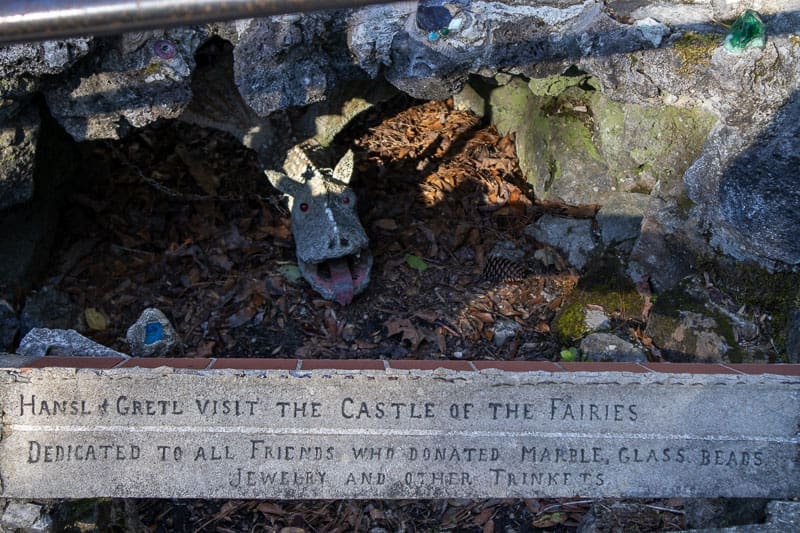
And yet, when I visited Ave Maria Grotto, that is exactly what I found — a dragon, made out of cement and chained just out of reach of the walkway leading visitors through a series of displays.
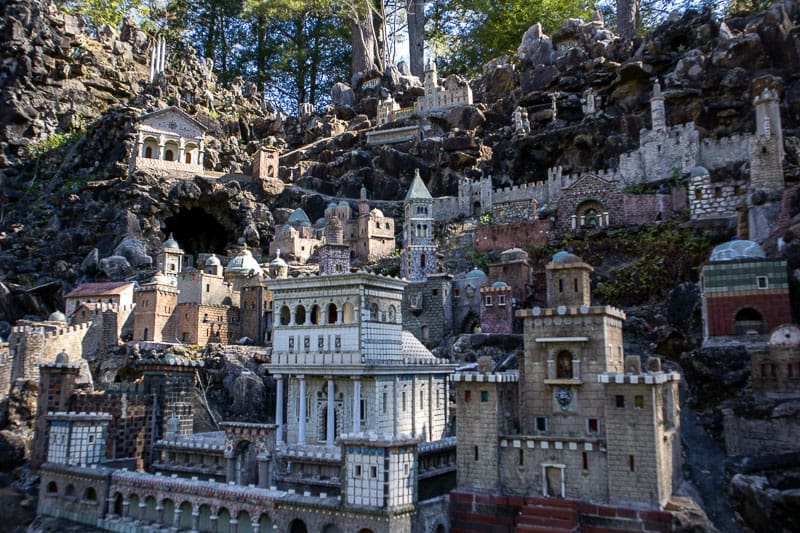
Located in an old quarry on the grounds of St. Bernard Abbey, Ave Maria Grotto is the home of the artistic works of Brother Joseph Zoetl.
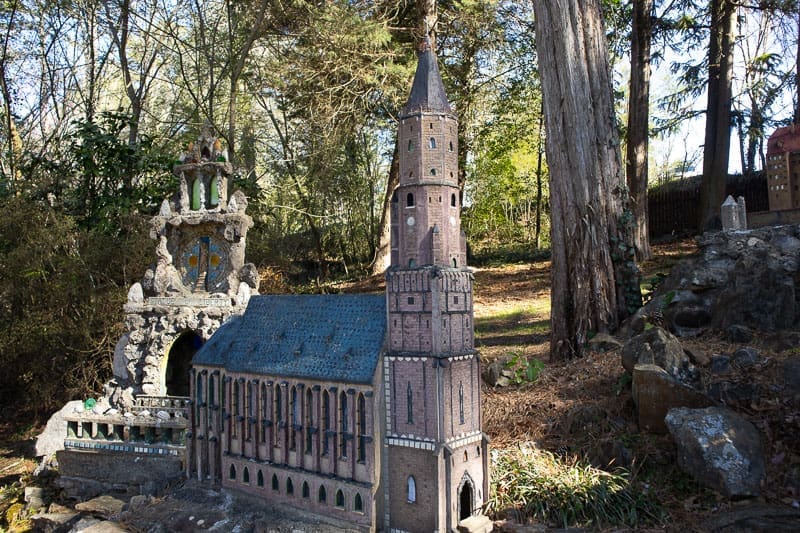
Zoetl was not a trained artist. He created his work from a large array of found objects and concrete, using them to create works such as his replica of St. Peter’s Basilica, the Coliseum in Rome, the Alamo, Jerusalem and the Leaning Tower of Pisa.
“In my opinion, this is probably one of the greatest folk art displays in the United States…especially from an untrained folk artist,” said Roger Steele, the director of Ave Maria Grotto.
According to Steele, Zoetl was a quiet man who kept to himself. His work first started when a salesman sold the monastery 500 small statuettes of various Catholic religious figures. Zoetl decided to take those statuettes and place them inside small grottos he crafted out of concrete.
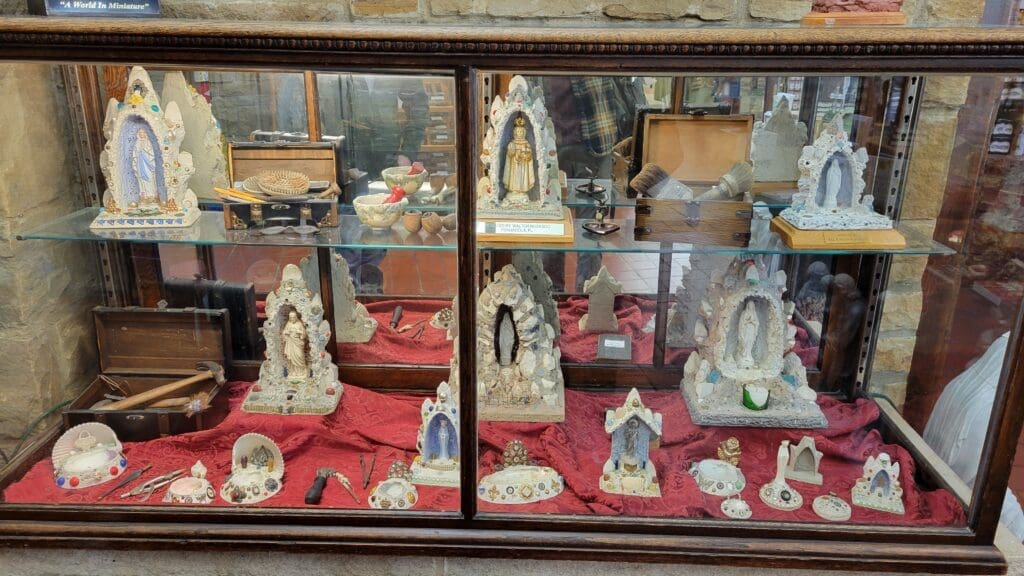
“Grotto is Italian for cave,” explained Steele. “Even in pagan days prior to Christianity, caves were always considered to be a special place or source of spirituality.”
The small grottos were sold to raise funds for the monastery, and after selling the original 500, he sold 5,000 more.
Zoetl’s back was broken when he was young, causing him to struggle with sleeping. He would stay up late, creating sculptures out of concrete.
Zoetl migrated from Germany to America when he was a teenager and lived his whole life in the monastery, so most of the sculptures he created of famous locations were done based on postcards, magazines and photos.
As he experimented and created sculptures, he placed them out in the woods, creating a kind of prayer garden for the monks, but as time went on, due to the amount of visitors coming to see the sculptures, the monks decided to relocate his work to an old quarry just outside of campus.
The creations of Zoetl weren’t just limited to famous historical sites or important scenes from Christianity, they also included elements that touched upon Zoetl’s personal history and some scenes of whimsy. It includes St. Martin’s church from his hometown, Landshut, Bavaria and a shrine incorporating the Statue of Liberty, commemorating his migration to the U.S. through Ellis Island when he was a teenager.
And also, of course, the dragon, which was featured as part of Hansl & Gretel Visit the Castle of the Fairies.
“He had a whimsical side to him,” said Steele. “[The dragon] has a little chain on it, because he said he didn’t want the kids to get scared.”
As visitors start down the walkway of the grotto, the first thing that they’ll see is a large nativity scene, which is one of the larger scenes at the site. Following the trail, visitors will then head to the section which includes what could be considered personal elements from Zoetl’s life, such as the sculpture of his hometown and The Tower of Thanks, which Zoetl created as a thank you to all of those who donated material for his work.
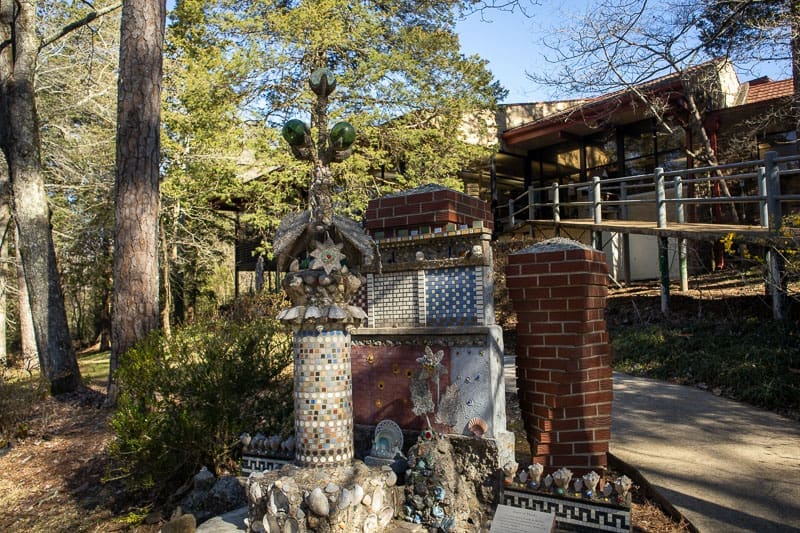
Many of the random items donated, which include broken seashells, cold cream jars and broken glass are still located in workshops, and are utilized by the grotto staff as they work to continue to preserve the location for future generations.
As visitors continue down the pathway, they’ll be greeted by the more whimsical elements, then they’ll reach Zoetl’s more historical and religious sections.
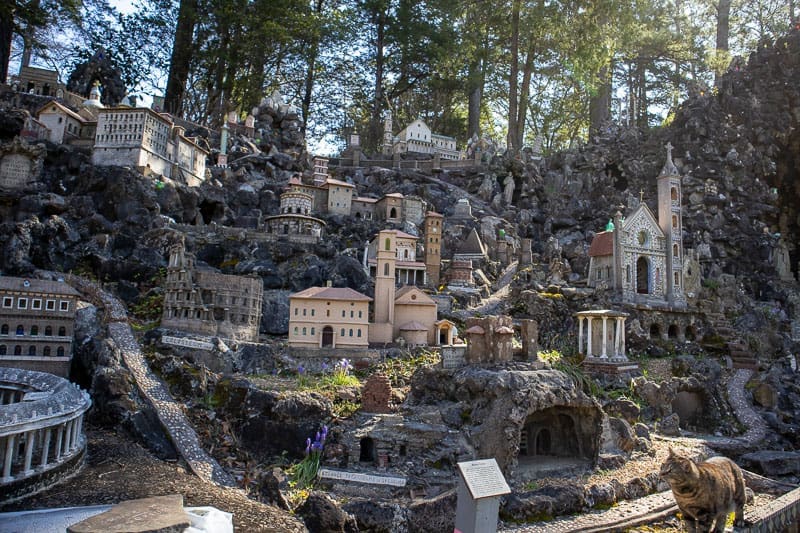
If you are lucky, as you walk along the path you’ll be greeted by the grotto’s self-appointed tour guide, a cat named Abby.
We met Abby at the very beginning of our own walk down the pathway. Every time we stopped to look at something she would stop just a little way down the trail and wait, occasionally meowing to remind us to keep moving.

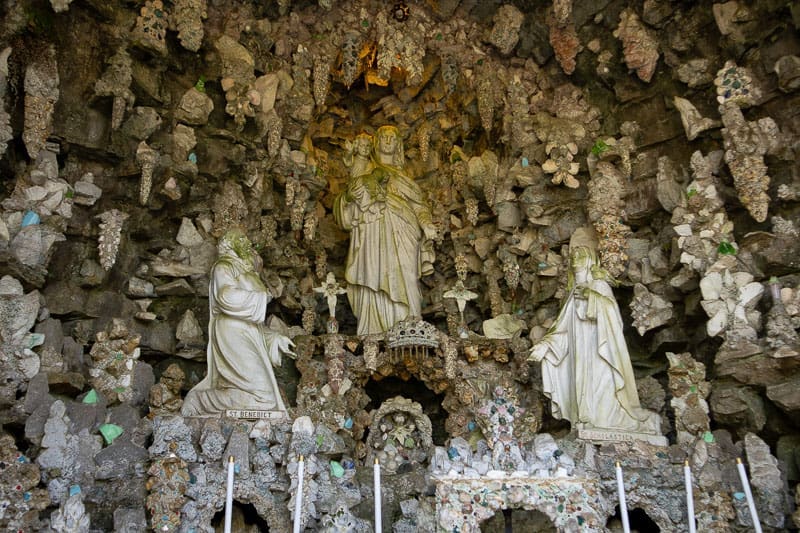
As the path progresses, it opens out into a small clearing, where a statue of Zoetl stands watch over his work and some benches are set aside for people to rest and sit. Here, one of the most impressive works of the site sits. A grotto is carved into the base of the hill you descended as you walked the path, and resting inside are statues of the Virgin Mary with child, Saint Benedict and Saint Scholastica.
Concrete stalactites extend down from the ceiling with bits of marble, glass and other materials pressed into their sides.
The path continues showcasing some of Zoetl’s earlier works, then progressing on towards a section that includes the Leaning Tower of Pisa, which we were unable to view due to preservation work.
Ave Maria Grotto was Zoetl’s lifelong work. According to Steele, he started building the grotto in the early 20th century, with his last structure being completed in 1958, just three years before his death in 1961.
Today, Ave Maria Grotto remains a popular place to visit, and according to Steele, it is a good place to come for those looking to experience something beyond themselves.
“That’s why I think people are attracted to come here, whether Catholic or not,” said Steele. “It’s because they’re searching for something and they get a little glimpse of it here.”
Want more Alabama Spotlight content? Check out our podcast!
Author

Like our work? Then support it!

Want to get early access to columns, unique newsletters and help keep The Sunrise News active? Then support us on Ko-Fi!